
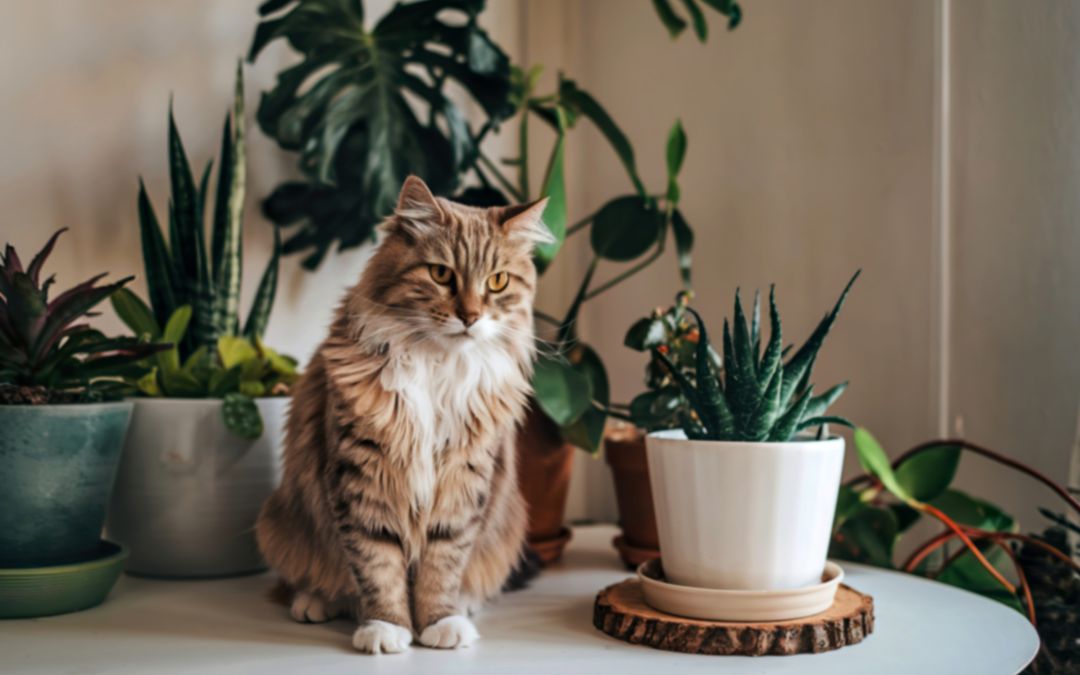
If you love having houseplants or a colorful garden, you’re not alone—but did you know some common plants can be dangerous to dogs and cats? We understand how worrisome it can be to realize that something beautiful in your home or yard might harm your pet.
At Midland Animal Hospital, our goal is to help you create a safe environment where your furry family members can thrive.
Common Toxic Plants for Dogs and Cats
Many plants can cause mild to severe reactions in pets, from an upset stomach to life-threatening illness. Here are some of the most common ones to watch for:
- Lilies (especially dangerous for cats— Can cause kidney failure)
- Azaleas & Rhododendrons – Can cause vomiting, drooling, and potentially dangerous heart effects
- Tulips & Hyacinths – Bulbs are especially toxic and can cause severe gastrointestinal upset
- Sago Palm – Extremely toxic; even small amounts can cause liver failure
- Oleander – Can affect the heart and be fatal if ingested
- Autumn Crocus – Causes severe vomiting, diarrhea, and organ damage
- Dieffenbachia (Dumb Cane) – Can cause intense mouth irritation and swelling
- Aloe Vera – Safe for skin use, but ingestion can cause vomiting and diarrhea in pets
When Should You Be Concerned?
Contact your veterinarian immediately if your dog or cat:
- Is drooling excessively
- Vomits or has diarrhea
- Seems lethargic or weak
- Has trouble breathing
- Shows signs of swelling around the mouth or face
If you know or suspect your pet ate a toxic plant, don’t wait for symptoms—seek help right away.
At Midland Animal Hospital, we’re committed to treating your pets like family. If you’re ever unsure, we’re just a phone call away—ready to listen, guide you, and provide the care your pet needs to feel better.
👉 MESSAGE US NOW at 706 323 – 8316 or Midlandah.com
In summary
Lilies, sago palms, azaleas, oleander, and many other plants can be harmful—or even deadly—to pets. Keep dangerous plants out of reach, and call your vet immediately if your dog or cat may have ingested one.